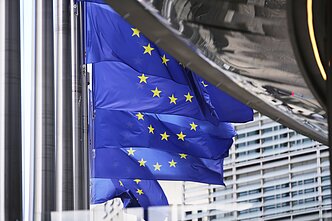













Russians are allowed to bring only items that pose no risk of sanctions evasion into the European Union, according to a further clarification issued by the European Commission on Wednesday.
The Lithuanian Foreign Ministry told BNS that this includes, for example, personal hygiene products or clothing packed in suitcases, which “will obviously be used during travel”.
“Member states should apply these restrictions proportionally and reasonably,” the ministry said in a comment.
According to the Commission’s clarification issued at the end of last week, cars purchased or registered in Russia cannot be allowed into the EU.
Further reading
The clarification concerns an earlier measure that has not been implemented uniformly across the bloc. The same measure also bans imports of everyday items, such as laptops, phones, or clothing, from Russia.
Because of this, Lithuanian politicians have asked the EU’s executive body for further clarification.
“I think that we, the Foreign Ministry, the Interior Ministry and the Customs, will sit down and review how this is can be implemented and how this can be set out in a working procedure,” Foreign Minister Gabrielius Landsbergis told reporters before the cabinet meeting.
“I wouldn’t rule out that there might be further inquiries to the European Commission,” he added.
The implementation of sanctions raises many questions because of a wide scope of restrictions on Russian citizens and their belongings, according to Landsbergis.
“I know that many wonder why there are so many clarifications, but I want to point out that the EU has never had a sanctions regime of this scope,” the minister said.
“We are learning along the way, both our institutions in informing about certain issues and the European Commission, which needs to adapt to the actual situation,” he added.

Landsbergis admitted that there was currently a “gap between those making decisions to fine-tune the sanctions and those implementing them at the border”.
Following last Friday’s clarification by the Commission of the implementation of the sanctions, cars with Russian registration plates are not allowed into Lithuanian territory as of Monday, unless they are transiting between Kaliningrad and mainland Russia.
A total of 36 Russian cars turned around at the Lithuanian border in the past two days when their drivers were informed that their vehicles could be confiscated if they entered.
These EU sanctions are designed to restrict the entry of goods from Russia into the bloc.
Lithuania, together with the other Baltic states and Poland, has also imposed restrictions on the entry of Russian citizens.
Only Russian diplomats, dissidents, employees of transport companies, family members of EU citizens, and holders of residence permits or long-stay national visas from Schengen countries have been allowed into Lithuania since September 19, 2022.
Russian citizens can also transit through Lithuania by train to and from the Kaliningrad exclave.
The Lithuanian parliament’s resolution declaring a state of emergency on the borders with Russia, in force at least through December 16, also bans the entry of Russian citizens.

Newsletter
Every Friday morning.